
Process and Policy Alignment: Ensuring Operations Reflect Written Guidance
Executive Overview
Organizations managing federal funds operate in environments where policies and procedures play a critical role in ensuring accountability, transparency, and compliance with regulatory requirements. Written policies establish expectations, define responsibilities, and guide operational decision-making.
Operational Alignment Model
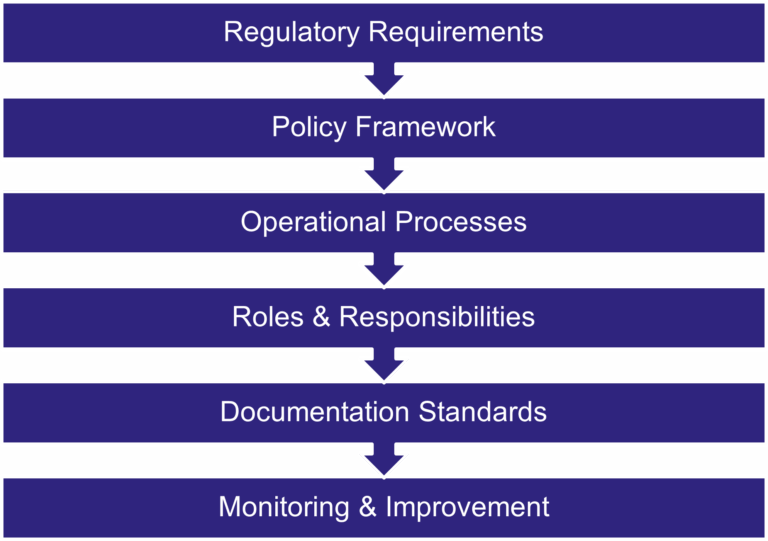
Operational Alignment Model
However, over time, many organizations experience a gradual disconnect between their documented policies and how work is actually performed. This misalignment can occur as programs evolve, staffing changes occur, new funding streams are introduced, or regulatory expectations shift. When written procedures no longer reflect operational practice, organizations may face increased compliance risks, inconsistent execution across teams, and difficulty demonstrating compliance during audits or monitoring reviews.
Process and policy alignment is therefore an essential component of effective governance. Organizations that periodically review and align operational processes with written procedures are better positioned to maintain consistency, strengthen documentation practices, and support defensible decision-making. This paper explores why process and policy alignment matters, where operational gaps commonly occur, and how organizations can strengthen their governance frameworks through structured process review and policy development.
Why Process and Policy Alignment Matters
Policies and procedures provide the foundation for consistent program operations. They define how activities should be performed, establish approval structures, and ensure that organizational practices comply with applicable regulatory requirements. When policies and procedures accurately reflect operational practices, they provide clarity to staff and support consistent implementation across programs and departments. However, when written procedures become outdated or misaligned with actual operations, several challenges may emerge:
- Staff may rely on informal practices rather than documented procedures
- Different departments may implement processes inconsistently
- Documentation requirements may be applied unevenly
- Supervisory oversight may be weakened
- Compliance risks may increase
In the context of federal funding, these operational gaps can create vulnerabilities that lead to audit findings, questioned costs, or monitoring issues. Process and policy alignment ensures that written guidance reflects operational reality while incorporating regulatory expectations.
Where Organizations Commonly Experience Gaps
Many organizations begin with strong policies and procedures, but operational realities evolve over time. Several factors commonly contribute to process and policy misalignment.
- Organizational Growth – As programs expand and funding increases, new operational demands may require adjustments to workflows and responsibilities. If policies are not updated to reflect these changes, staff may develop informal practices that diverge from written guidance.
- Staff Turnover – Institutional knowledge often resides with experienced staff. When turnover occurs, undocumented practices may be lost, and newer staff may interpret policies differently.
- Regulatory Changes – Federal requirements, guidance, and oversight expectations evolve over time. Policies developed under earlier regulatory frameworks may not reflect current compliance requirements.
- Decentralized Operations – Organizations operating across multiple departments or locations may experience inconsistent implementation of policies if operational expectations are not clearly defined.
Without periodic review, these factors can gradually create operational inconsistencies that undermine governance structures.
Framework for Process and Policy Alignment
Organizations can address these risks by implementing a structured approach to reviewing and aligning policies, procedures, and operational workflows.
- Process Mapping – Process mapping involves documenting how work is actually performed. This includes identifying key tasks, decision points, approvals, and handoffs between individuals or departments. Mapping operational workflows allows organizations to understand how responsibilities are distributed and where potential inefficiencies or control gaps may exist.
- Policy Review – Once workflows are documented, organizations can compare operational practices against existing policies and procedures. This comparison helps identify areas where written guidance may no longer reflect operational reality.
- Gap Identification – A structured review allows organizations to identify gaps such as:
- unclear responsibilities
- redundant approval steps
- missing documentation requirements
- inconsistent procedures across departments. Identifying these gaps enables leadership to address operational risks before they lead to compliance issues
- Policy Development and Revision – Updated policies should reflect both operational realities and applicable regulatory expectations. Clear policies improve consistency while supporting effective oversight and accountability.
Practical Implementation
Organizations seeking to strengthen process and policy alignment should consider several practical steps. First, conduct periodic operational reviews to document key workflows and identify areas where procedures may have evolved. Second, engage staff responsible for executing processes. Frontline staff often provide valuable insight into operational challenges and opportunities for improvement. Third, ensure policies clearly define responsibilities, documentation expectations, and approval authorities. Finally, establish a schedule for periodic policy review. Governance frameworks should evolve alongside organizational growth and regulatory changes. Organizations that invest in structured process and policy alignment strengthen operational clarity while reducing compliance risk.
Download the Process and Policy Alignment Checklist
We’d love to hear from you. Reach out at info@bfssp.com.
© 2026 – Business & Financial Management Solutions, LLC dba BFS Strategic Partners