
Strong Internal Controls: The Foundation of Defensible Grants Management
Executive Overview
Public sector organizations today operate in an environment of heightened oversight, complex funding streams, and increasing accountability expectations. Federal grants bring tremendous opportunity – but they also introduce compliance obligations that can challenge even well-run organizations. Many audit findings, questioned costs, and compliance issues do not stem from intentional wrongdoing. More often, they arise from unclear procedures, inconsistent documentation, or internal control structures that have not evolved alongside program complexity. For organizations managing federal funding, strong internal controls are not optional—they are essential.
What Internal Controls Really Do
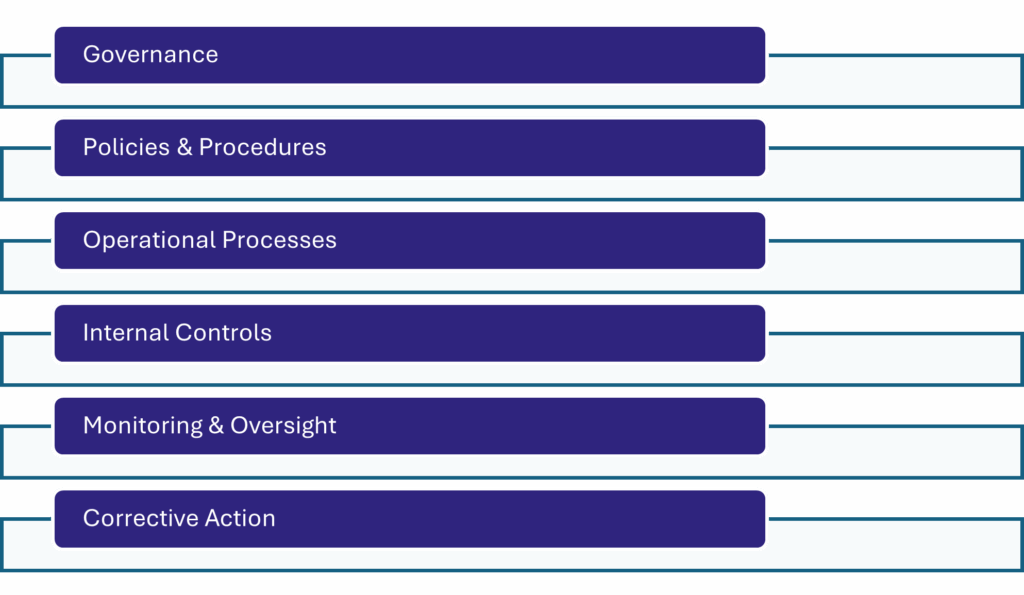
Internal controls are often misunderstood as bureaucratic requirements or paperwork exercises. In reality, well-designed controls serve a much more important function: they create clarity, consistency, and accountability in how programs operate. Effective internal controls help organizations:
- Protect public funds from fraud, waste, and misuse
- Ensure compliance with federal requirements
- Strengthen financial integrity and transparency
- Improve operational efficiency
- Build confidence among auditors, leadership, and stakeholders
When internal controls are functioning properly, organizations can demonstrate not just that they complied with requirements—but that they managed public resources responsibly.
Where Control Environments Break Down
In our experience working with government agencies, educational institutions, and nonprofits managing federal awards, control challenges typically arise in several areas.
- Segregation of Duties – Staffing limitations often require individuals to perform multiple roles within financial processes. Without compensating controls, this can increase risk exposure and create audit vulnerabilities.
- Documentation and Approval Workflows – Organizations frequently rely on informal practices rather than documented procedures. When staff turnover occurs—or when auditors request documentation—those informal practices become difficult to demonstrate.
- Grant-Specific Compliance Requirements – Federal programs introduce additional compliance requirements related to allowability, procurement, monitoring, and reporting. Internal processes that work well for general operations may not adequately address grant-specific expectations.
- Evolving Regulatory Requirements – Federal guidance, oversight expectations, and funding structures continue to evolve. Controls that were appropriate five years ago may no longer address current compliance risks.
The Role of Control Frameworks
Two widely recognized frameworks guide the design and evaluation of internal controls in public-sector environments:
- COSO Internal Control Framework
- GAO Standards for Internal Control in the Federal Government (Green Book)
These frameworks provide structured approaches to evaluating risk, designing control activities, and ensuring ongoing monitoring. However, frameworks alone do not solve operational challenges. Controls must be practical, sustainable, and aligned with how an organization actually operates.
Practical Internal Controls in Action
Strong internal control environments typically include:
- Clearly defined roles and responsibilities – Staff understand who performs each step in a process and who provides review and approval.
- Documented procedures and workflows – Processes are written, accessible, and consistently followed.
- Risk-informed oversight – Resources are focused on the areas most likely to create compliance exposure.
- Monitoring and continuous improvement – Organizations periodically evaluate whether controls are functioning as intended and adjust when necessary.
These elements create operational consistency and allow organizations to demonstrate compliance even when staff change or oversight increases.
Why Internal Control Assessments Matter
Even organizations with strong leadership and dedicated staff can develop control gaps over time. Programs grow, funding expands, and processes evolve. Periodic internal control assessments allow organizations to:
- Identify areas where control design may be incomplete
- Evaluate whether controls are operating effectively
- Address risks before they become audit findings
- Strengthen documentation and accountability
Rather than waiting for external oversight to identify weaknesses, proactive organizations evaluate their control environments to ensure they remain aligned with regulatory expectations.
Download the Internal Controls Self-Assessment
We’d love to hear from you. Reach out at info@bfssp.com.
© 2026 – Business & Financial Management Solutions, LLC dba BFS Strategic Partners