
Corrective Action Frameworks: Turning Findings into Operational Improvement
Executive Overview
Organizations managing federal funds operate under significant oversight from auditors, grantors, and regulatory agencies. When findings are identified through audits or monitoring reviews, organizations are expected to implement corrective actions that address the underlying issue. However, many organizations focus on resolving the immediate finding without addressing the operational conditions that allowed the issue to occur.Corrective action should not simply be a response to oversight. Instead, it should function as a structured process for identifying operational weaknesses and strengthening organizational systems.
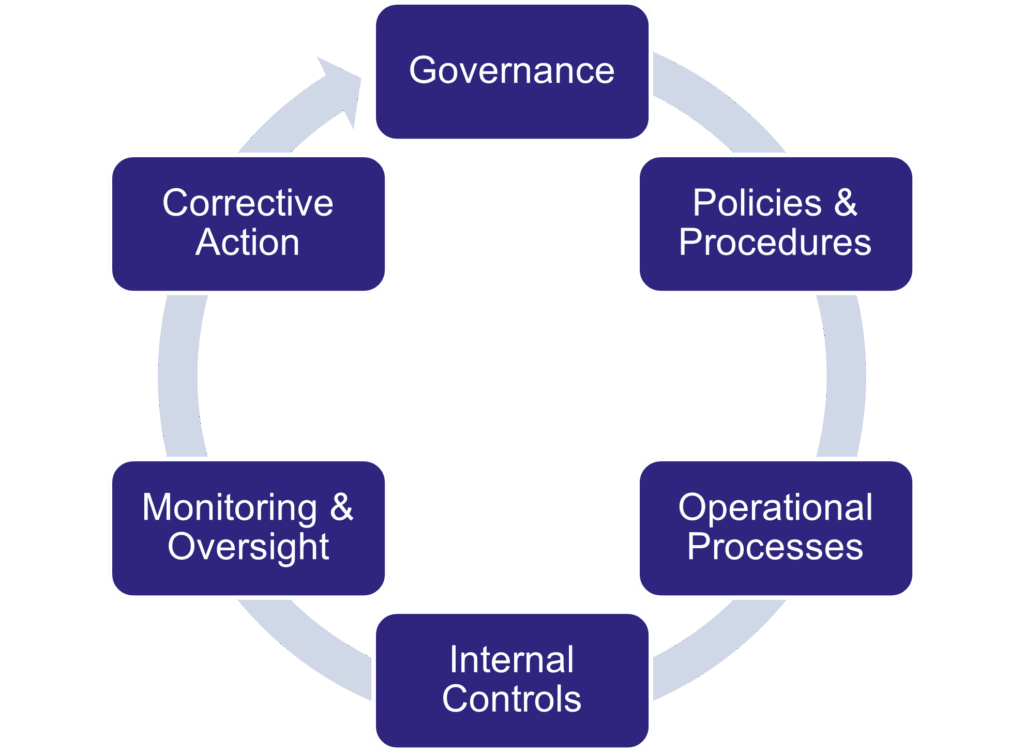
Corrective Action Lifecycle
When implemented effectively, corrective action frameworks allow organizations to resolve findings, strengthen internal controls, and prevent repeat issues.
Why Corrective Action Matters
Audit findings are often perceived as indicators of organizational failure. In reality, findings frequently reveal operational weaknesses that may have developed gradually over time. Common examples include:
- unclear documentation procedures
- inconsistent monitoring practices
- incomplete internal controls
- policies that do not reflect operational reality
When organizations treat findings as isolated events, they may address the immediate issue without resolving the underlying cause. A structured corrective action framework helps organizations move beyond short-term fixes by focusing on root cause analysis and sustainable operational improvements. Organizations that implement structured corrective action processes often experience:
- fewer repeat findings
- stronger documentation practices
- improved internal control environments
- more consistent operational procedures
Corrective action should be viewed as an opportunity to strengthen organizational systems rather than simply respond to oversight.
Framework for Effective Corrective Action
Organizations can strengthen corrective action processes by implementing several key components.
- Finding Analysis – Organizations should begin by carefully reviewing the finding to understand the nature of the issue, applicable requirements, and operational implications.
- Root Cause Evaluation – Effective corrective action requires identifying the underlying cause of the issue. Root causes may include policy gaps, unclear procedures, insufficient oversight, or training deficiencies.
- Corrective Action Planning – Corrective action plans should clearly define: actions required to address the issue, responsible individuals, and implementation timelines
- Implementation Tracking – Organizations should maintain structured tracking systems to monitor corrective action progress and ensure accountability.
- Verification of Resolution – Before closing corrective actions, organizations should verify that the implemented changes have effectively addressed the underlying issue.
Common Challenges in Corrective Action Implementation
Many organizations encounter challenges when implementing corrective actions.
- Limited Root Cause Analysis – Organizations may focus on correcting the specific issue identified in a finding without evaluating why the issue occurred in the first place.
- Unclear Responsibilities – Corrective action plans sometimes lack clearly defined responsibilities, leading to delays or incomplete implementation.
- Inconsistent Tracking – Without structured tracking systems, organizations may struggle to monitor the progress of corrective actions across departments or programs.
- Lack of Verification – Corrective actions may be considered complete without verifying that the underlying issue has been fully resolved.
These challenges highlight the importance of structured frameworks for managing corrective action processes.
Practical Implementation
Organizations can strengthen corrective action systems by establishing clear governance structures for responding to findings. Leadership should ensure that corrective action responsibilities are clearly defined and that progress is regularly reviewed. Organizations should also maintain documentation demonstrating how corrective actions were implemented and verified. Periodic reviews of corrective action frameworks help ensure that operational improvements are sustained over time.
Download the Corrective Action Self-Assessment
We’d love to hear from you. Reach out at info@bfssp.com.
© 2026 – Business & Financial Management Solutions, LLC dba BFS Strategic Partners